Sowing the Seeds – Part II

While the children finished getting ready Charles and Vanessa transmitted between one another a flurry of holographic images of the children–mundane scenes of the children playing or learning; extraordinary images of the pair fencing, acting out Shakespeare, and even dissecting a small Terran amphibian called a frog that had been carried to the colonies with many other species from Earth. All the images were transmitted and absorbed in fiber optic seconds.

“I’ll miss them too, Vanessa. But we have raised them well. With some luck, they will prosper on the planet’s surface.”

Vanessa did not reply, but simply kept playing the images back within her digital mind.

Soon Adam and Eve appeared on the deck, glowing and confident in their shiny new space suits.

“Goodbye, Mother and Father,” they stated in one voice. Then, in an unexpected and irrational manner, both moved over to the wall and placed their hands on the cool metal of the ship.

“Good luck, children. Remember your teachings,” said Charles.

“Goodbye…dear ones,” whispered Vanessa.

The pair’s booted feet clunked down the ladder to the shuttle bay. Once the children were strapped in, Charles and Vanessa sent a signal to the Athenia to open the shuttle bay doors.

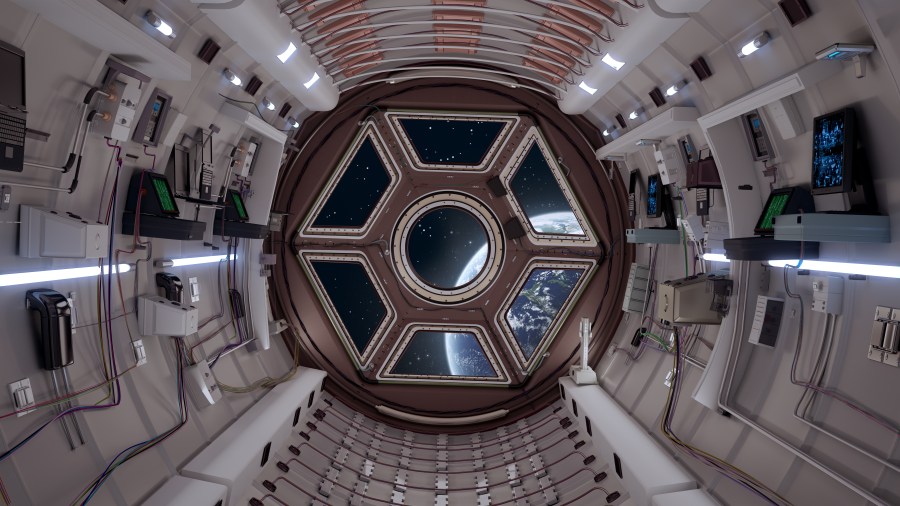
Ghost-like, the silver shuttle rocketed away from the metal world that had sheltered them for all of their years.

Eve placed one gloved hand and the visor of her helmet against the starboard portal of the shuttle to watch the shiny obelisk of the Athenia shrink behind them.

Centuries ago the machine wars had ravaged Earth, sending groups of humans to the stars to avoid extinction. Probes sent to Earth from Adam and Eve’s ancestors had finally returned with confirmation that it was safe to return. Earth had become a metallic graveyard-somehow, perhaps due to bitter fighting between rival AIs or more simply exhausted power cells, the machines that had conquered the planet were now little more than rusted hulks.

To Be Continued…

Sowing the Seeds – Part I


“Good morning, Vanessa,” the computer named Charles intoned.
“Good morning, Charles. I take it that you slept well?” The higher, sexless voice of the computer named Vanessa replied.
“Like a baby,” replied Charles. These words, too, had been spoken in exactly the same manner at exactly the same time for years as well.
But today was different. Today represented the culmination of eighteen years of wandering the stars.
Today Charles and Vanessa would make a very conscious decision to self-destruct the Athenia, thereby scattering the tiny bits of their circuitry across the void of space like so many atoms, being of quite rational mind while doing so.
But that was later today. Now it was time to wake the kids.
Soft diodes of light slowly increased in radiance within the sleep chambers of the children, bathing the faces of the boy Adam and the girl Eve in angelic luminescence.
For reasons Charles and Vanessa could never understand, Adam and Eve rubbed their eyes, yawned, sighed, scratched themselves, and in general responded to their awakening in a uniquely human but totally irrational manner.
“Good morning, children,” cooed Vanessa.
“Good morning, Mother,” replied Eve.
“Good morning, Father,” replied Adam. This also was part of the daily ritual.
“Please groom and take nourishment, children,” boomed Charles. “Today is a special day.”
“Yes, Father,” the pair replied in unison.
The children went about their business while their guardians chatted.
“I can’t believe that the day is here,” fretted Vanessa, her external sensors playing across the blue-green planet far below the ship. The Athenia had assumed orbit around Terra, what the humans of the old world had called Earth, during the night while the children slept.
“Yes,” mused Charles, “it seems only yesterday that they were infants.”
Adam and Even had been artificially conceived, born and raised aboard the ship. Its metal interior had defined and bounded the children’s entire existence…until today.

TO BE CONTINUED…

Samsara Magazine Celebrates 30 Years of Publishing in the Small Press

Time flies.

It seems like only yesterday that I opened a post office box in College Park, Maryland to accept submissions for a new literary journal named Samsara: The Magazine of Suffering.    The year was 1993, and I was a student at the University of Maryland.  During my studies I came across the Buddhist concept of samsara, the continuous cycle of suffering and rebirth until one achieves enlightenment.  Of course, my twisted college brain immediately thought:  “Why wouldn’t that be wonderful!  A literary journal based on suffering!”

Well, maybe there was a  bit more to it than that.  After all, the official theme of the journal is artwork, poetry and fiction centered around suffering and healing, the latter being arguably far more important to us as human beings.

Through the years, the magazine’s reach has expanded (we’ve published writers from Africa, Canada, Mexico, France, Japan, and the United Kingdom), and my wonderful wife Lisa Flach-Fulcher joined the effort as the Managing Editor, vastly improving many of the day-to-day operations of the journal. 

Despite these changes, Samsara has remained true to form, only accepting works that emphasize the central theme of suffering and healing.  Beyond that, the magazine has no genre restrictions, and we’ve been amazed by the variety of ways that artists and writers have incorporated these themes into their submissions over the years.

We expected stories from cancer survivors, those recovering from addiction, and those mourning a lost love.  All these themes are critically important to Samsara.  But the creative spark will not be denied, and we received pleasantly unexpected new spins on suffering and healing as well.  Consider the suffering of an alien race slowly perishing due to a dying sun, or a vampire with dementia.  Consider a man plagued by the voice of a subway train that lures him to his death, or a paranoid individual convinced that fish live in his waterbed, giving him incurable insomnia.

All these ideas and more have appeared in Samsara’s pages, thanks to the ingenuity of our contributors.

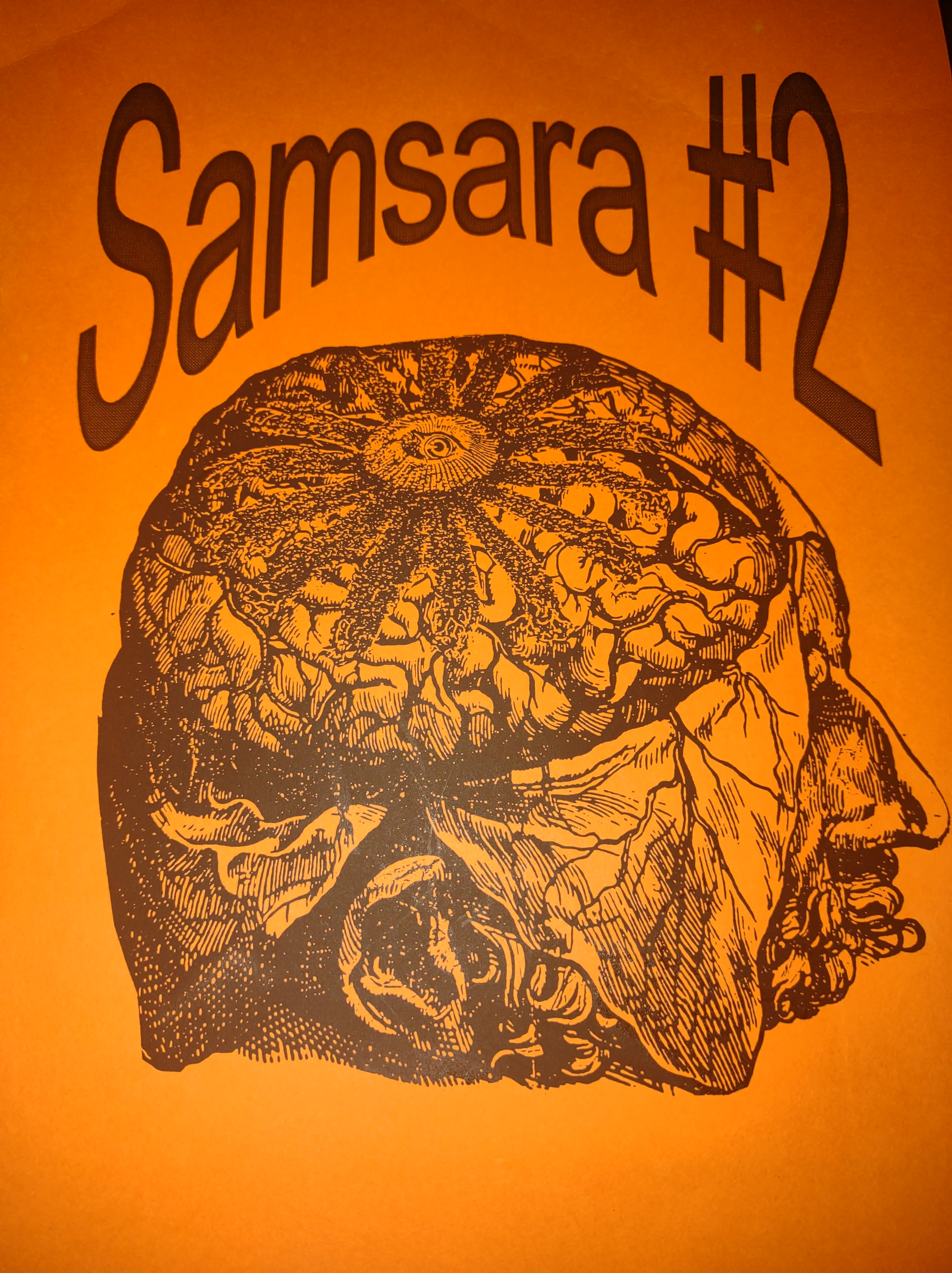
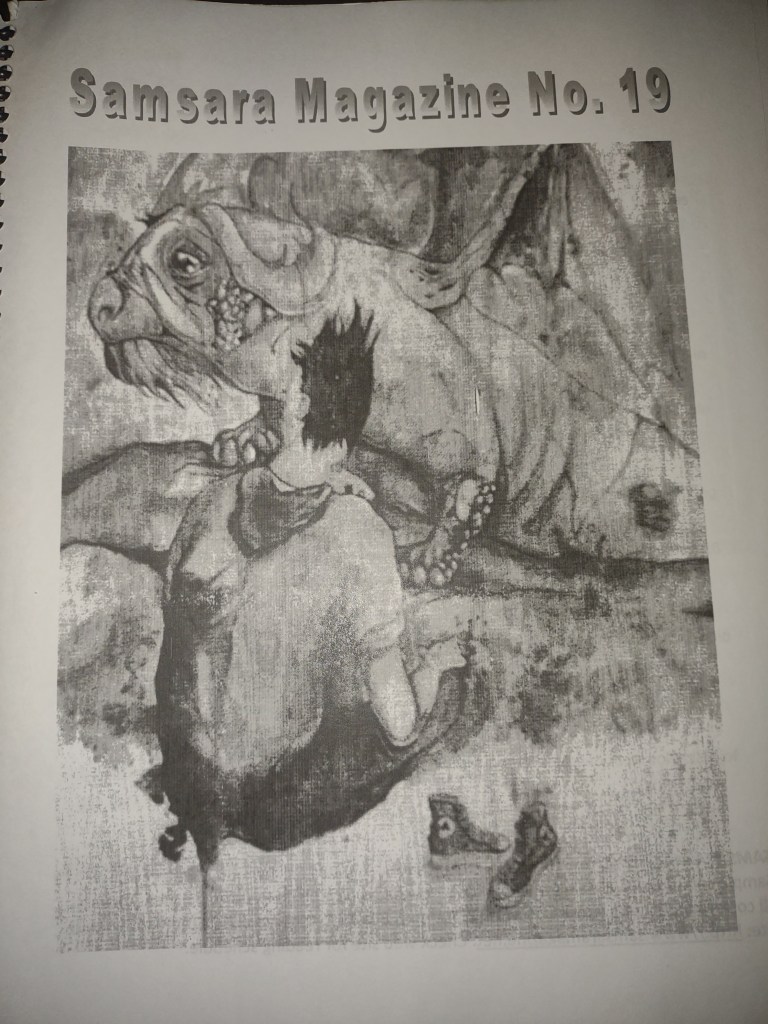
Although we do not receive a lot of artwork, we always need art for the cover. The imagery of Samsara has changed throughout the years as well, so below we’ve presented some of the more interesting covers from our supporting artists.

Stay tuned, for in 2024 we plan to do something special for our 25th Issue!

Thank you to everyone that has joined on us on this publishing journey, and all of those interested in submitting in the future. Without you, there would be no Samsara Magazine.

Here’s to 30 more years!!

Best,

Lisa Flach-Fulcher, Managing Editor

R. David Fulcher, Editor